
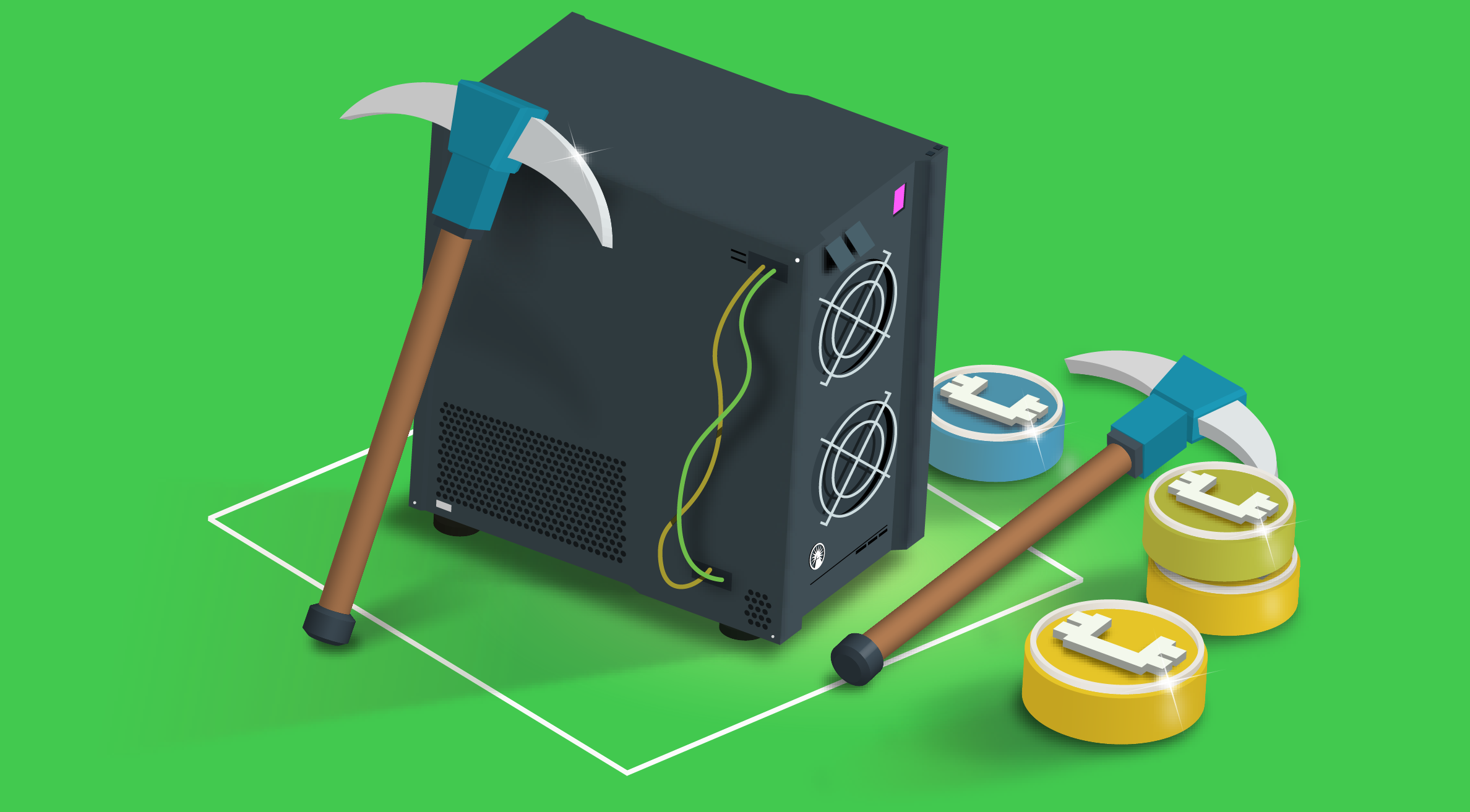
Bitcoin mining is the process by which new Bitcoin transactions are verified, added to the blockchain, and new Bitcoin is created. If you are curious how does mining bitcoin work, miners use powerful computers to solve complex mathematical puzzles. The first miner to solve the puzzle earns the right to add the next block of transactions to the blockchain and receives a “block reward” in the form of newly minted Bitcoin.
That’s the core of it. Here’s what’s actually happening behind the scenes.
The Problem Bitcoin Mining Solves
Bitcoin has no central authority – no bank, no government – to verify that transactions are legitimate and prevent double-spending (spending the same Bitcoin twice). Mining replaces that central authority with a decentralized competition that makes fraud computationally impractical.
Every 10 minutes, thousands of pending transactions need to be bundled into a “block” and permanently added to the public ledger (the blockchain). Mining is how that happens.
The Mining Process: Step by Step
Step 1: Transactions are broadcast
When someone sends Bitcoin, that transaction is broadcast to a global network of computers (nodes). It sits in a pool of unconfirmed transactions called the “mempool.”
Step 2: Miners collect transactions
Miners gather transactions from the mempool and group them into a candidate block. They prioritize transactions with higher fees (more profitable for them).
Step 3: The hash puzzle
Every block must include a “proof of work” – a specific hash value that meets a difficulty target. A hash is a fixed-length string of letters and numbers produced by a cryptographic function (SHA-256 for Bitcoin).
Miners repeatedly change a small variable in the block header (called a “nonce”) and run it through SHA-256 until the output hash starts with a certain number of zeros. This is pure trial and error – there’s no shortcut.
Step 4: First to solve wins
The miner who finds a valid hash broadcasts it to the network. Other nodes verify it instantly (verification is easy; finding it is hard). The winning miner adds the block to the blockchain.
Step 5: The reward
The winning miner receives the block reward (currently 3.125 BTC after the April 2024 halving) plus all transaction fees from the transactions in the block.
The Economics of Bitcoin Mining
| Factor | Details |
|---|---|
| Block reward (2024) | 3.125 BTC per block |
| Blocks per day | ~144 |
| New BTC created daily | ~450 BTC |
| Transaction fees | Variable; additional income for miners |
| Halving schedule | Every 210,000 blocks (~4 years); reward cuts in half |
| Last halving | April 2024 |
| Estimated final Bitcoin | ~2140 (when all 21M are mined) |
What Mining Requires
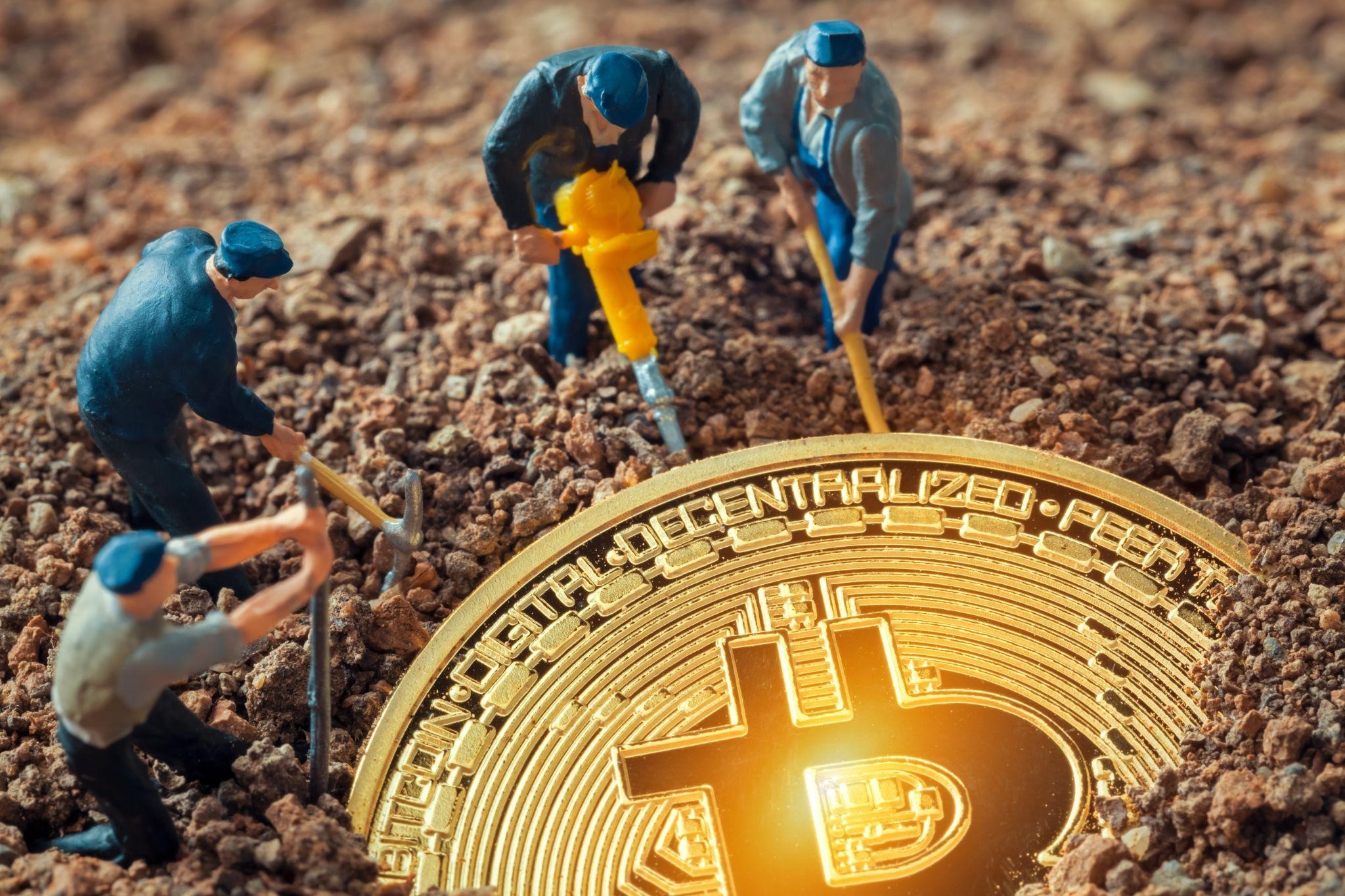
| Resource | Why It Matters |
|---|---|
| ASIC hardware | Specialized chips (Application-Specific Integrated Circuits) built specifically for SHA-256 hashing |
| Electricity | Mining’s biggest cost – modern ASIC rigs consume 3,000-5,000+ watts each |
| Cooling | Hardware generates substantial heat; data center cooling is essential |
| Internet connection | Reliable, low-latency connection to stay in sync with the network |
| Mining pool membership | Solo mining is statistically impractical; pools combine computing power and share rewards |
Is Bitcoin Mining Profitable?
Profitability depends entirely on:
- Bitcoin price – higher price = more valuable rewards
- Network difficulty – adjusts every 2,016 blocks to keep block time at ~10 minutes
- Electricity cost – the single largest variable; miners in regions with cheap power (hydro, geothermal) have a major advantage
- Hardware efficiency – newer ASICs do more hashing per watt
At current difficulty levels, small-scale individual mining is rarely profitable. Large-scale industrial mining operations in low-cost electricity regions (Iceland, Kazakhstan, Texas) dominate the industry.
The Bottom Line
Bitcoin mining is a competitive, energy-intensive process that secures the network through economic incentive – miners spend real resources (electricity, hardware) to earn Bitcoin rewards. The “work” they prove they’ve done is what makes the blockchain trustworthy and tamper-resistant. As the block reward shrinks with each halving, transaction fees become increasingly important to miner economics.
